
Not all children’s stories are equal in terms of cognitive stimulation. A story read passively before bedtime and an open tale followed by divergent questions (“what if the wolf had been scared?”) engage different mechanisms in a 4 or 7-year-old child. This article compares storytelling formats for children based on their actual ability to awaken imagination, relying on available data.
Open tales vs. passive reading: what research shows
An experimental program conducted in Peru with 5-year-old children tested a specific storytelling protocol. The researchers did not just read stories: they combined multi-purpose narratives, “what if…?” questions, and sessions where children invented their own variations.
The result: children exposed to this protocol show a significant improvement in their creative thinking, measured by tasks of idea divergence and object transformation, compared to a control group subjected to traditional reading. In other words, the format of the story and the way it is delivered matter more than simply telling a story.
This distinction between active storytelling and passive listening is rarely addressed on websites that compile lists of “beautiful stories.” Several online resources, such as histoire-enfant.fr, offer a variety of narratives, but the choice of format remains the responsibility of the parent or educator.
| Narration format | Imagination engagement | Usage example |
|---|---|---|
| Passive reading (text read without interaction) | Low to moderate | Bedtime story read word for word |
| Multi-purpose tale + open questions | High (divergent thinking) | Tale where the child chooses the continuation |
| Audio story without illustration | High (mental visualization) | Podcast or oral story without visual support |
| Cartoon adapted from a tale | Low (imposed images) | Animated version of a classic |
This table summarizes a recurring finding in recent literature: the absence of imposed images forces the child’s brain to construct its own representations. Animated versions of a story engage the brain region associated with imagination less than audio or read-aloud versions.
Audio stories for children: an underestimated format for creativity
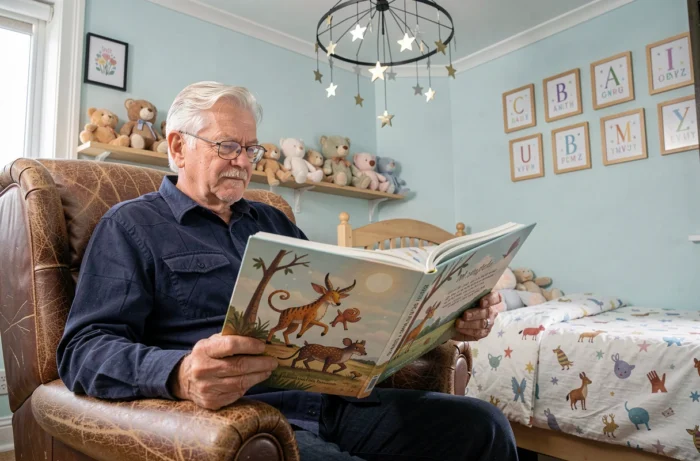
Podcasts and audio storytelling are experiencing rapid growth in the Francophone youth market. This format has a specific cognitive advantage: without visual support, the child must imagine the settings, faces, and colors. This voluntary mental load is precisely what stimulates creativity.
In contrast, a child watching the animated version of the same tale receives ready-made images. The difference does not lie in the quality of the story but in the neural work required from the listener.
- Audio stories are particularly suitable for car rides or quiet moments without screens, where the child has no choice but to mentally visualize the narrative.
- Short episode podcasts (under ten minutes) maintain the attention of children aged 3 to 6 without cognitive overload.
- Audio tales that incorporate narrative pauses (“what do you think the character will do?”) partially replicate the active storytelling protocol described above.
A well-constructed audio narrative can be more “imaginative” than an illustrated book, provided the child is in a state of active listening and not just background noise.
Classic tales or invented stories: what impact on narrative awakening
The tales of Perrault, Grimm, or Andersen remain pillars of children’s literature. Their narrative structure (initial situation, trial, resolution) gives children a mental framework to understand how a story works. A child who has heard several classic tales identifies typical characters (the princess, the hero, the antagonist) and transformation patterns more quickly.
Stories invented by the parent or the child themselves play a different role. They develop divergent thinking, the ability to produce multiple possible responses to a given situation. When a child invents the continuation of a story, they do not engage narrative memory but pure creativity.
The most effective approach combines both. The classic tale provides vocabulary, archetypes, and structure. The invented story encourages the child to reuse these elements in a new context.
- Reading a classic tale, then asking the child to modify an element (the setting, the main character, the ending) constitutes a simple and documented exercise.
- Stories featuring characters in a forest, a kingdom, or a fantastical universe offer more opportunities for imagination than stories grounded in everyday life.
- Legends from various traditions (African tales, Asian narratives, Native American legends) broaden the child’s mental repertoire and introduce unusual narrative patterns.
Adapting the story to age: concrete guidelines for parents
For toddlers (under 3 years), short stories with repetitions and predictable rhythms work best. The child does not yet follow a complex narrative thread, but they recognize sound patterns and language rituals. Narrative nursery rhymes and cumulative structure stories (“and then he met…”) serve this purpose.
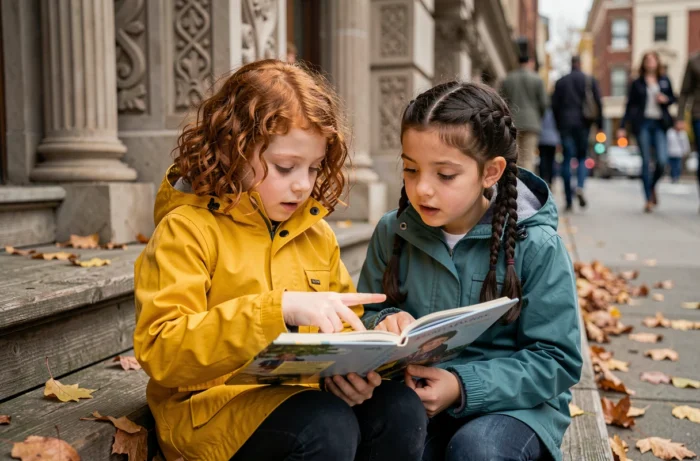
Between 3 and 6 years, wonderful tales take over. The child can follow a plot with a beginning, middle, and end. This is the period when “what if…?” questions have the most impact on creative thinking, as confirmed by the aforementioned Peruvian protocol.
After 6 years, longer narratives, chapter stories, and structured legends capture attention. The child begins to anticipate twists and formulate their own narrative hypotheses. This is also the age when inventing their own stories becomes a powerful tool for cognitive development.
The format matters as much as the content. A classic tale read without interaction remains a pleasant moment, but its potential to awaken imagination depends on what happens after the last page: the question asked, the variant proposed, the silence left for the child to extend the story in their mind.