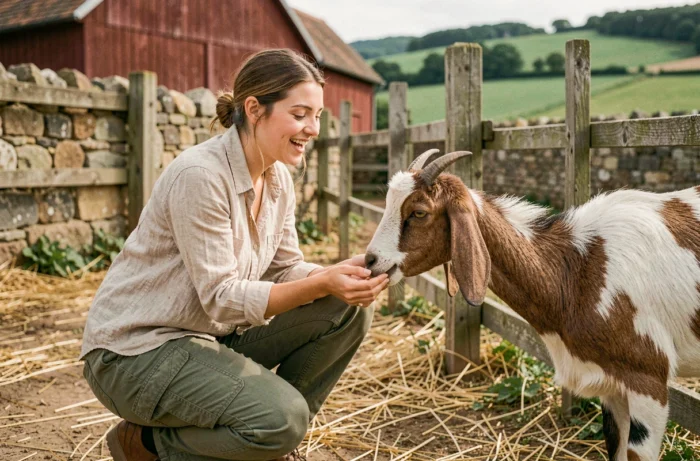
What should we remember from a visit to a pedagogical farm organized by a rural community for its youngest residents? Supervision, diversity of workshops, adaptation to age groups, and hygiene measures: these concrete components determine the success of such an outing.
It is precisely this analytical framework that helps us understand why the visit to the pedagogical farm of Bocage Cenomans, in Pruillé-le-Chétif, received such positive feedback.
Hygiene and safety during a visit to a pedagogical farm with young children
The guides for families emphasize a point often underestimated: washing hands after each contact with animals. This recommendation applies to all ages, but it is particularly important for toddlers who frequently put their fingers in their mouths.
For children under three years old, early childhood specialists recommend shortening the duration of the visit. A visit that is too long generates fatigue and reduces attention span, which limits the educational interest of the outing.
In the context of Bocage Cenomans, the intercommunal union is already involved in childhood and youth services through its Maison de la Petite Enfance in Pruillé-le-Chétif. This institutional proximity to childcare structures facilitates the adaptation of outings to the health constraints specific to communities: enhanced supervision, accessible water points, and calibrated break times. The visit organized at the pedagogical farm of Bocage Cenomans was part of this structured support approach.
Activities offered at the pedagogical farm: beyond animal observation
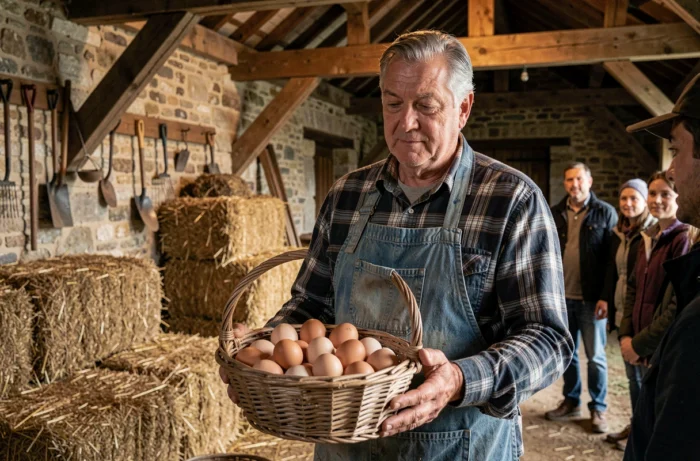
The classic image of a pedagogical farm often boils down to animal enclosures. In practice, active farms offer a broader range, and this is a key criterion for evaluating the quality of a visit.
Typical components of a visit to a pedagogical farm
| Type of activity | Educational objective | Suitable for under 3 years |
|---|---|---|
| Observation and contact with animals | Sensory discovery, species recognition | Yes, with close supervision |
| Discovery of crops and the vegetable garden | Understanding the plant cycle, seasonality | Partially (limited handling) |
| Transformation workshop (butter, cheese) | Link between raw material and finished product | No (fine motor skills required) |
| Free outdoor exploration | Autonomy, exploration of the rural environment | Yes, on secure ground |
By comparison, some farms like Ferme Lait Prés Verts incorporate the discovery of milking and dairy processing into their visits. The diversity of workshops directly influences children’s engagement throughout the visit.
For an intercommunal structure like Bocage Cenomans, the choice of partner farm relies on its ability to offer several of these aspects simultaneously, not just the animal dimension.
Pedagogical farm and childhood-youth framework in Bocage Cenomans
The intercommunal union of Bocage Cenomans includes several municipalities in Sarthe, including Pruillé-le-Chétif, Saint-Georges-du-Bois, Trangé, Chaufour-Notre-Dame, and Fay. Its missions cover early childhood care, extracurricular activities, and early childhood support.
The organization of a farm visit is part of a broader educational program, centered around parenting and awakening. The parenting newsletter distributed by the union reflects this desire to offer families structured collective times, outside the strict school framework.
This positioning partly explains the success of the outing: the participating families were already familiar with the union’s services (multi-reception Pomme de Reinette, holiday ALSH) and benefited from a pre-existing trust framework. Family loyalty to childhood services facilitates participation in educational outings.
Criteria for success of a collective outing in a rural setting
- An appropriate supervision ratio for the age of participants, enhanced for those under three years, with staff trained in hygiene practices specific to animal contact
- A farm offering at least two complementary types of activities (animals and plants, or animals and processing) to maintain attention throughout the visit
- A calibrated visit time: shorter for toddlers, with integrated breaks during the visit rather than imposed at the end
- Prior communication to families about health guidelines, appropriate clothing, and the planned itinerary
Pedagogical farms in Pays de la Loire: a developing territorial network
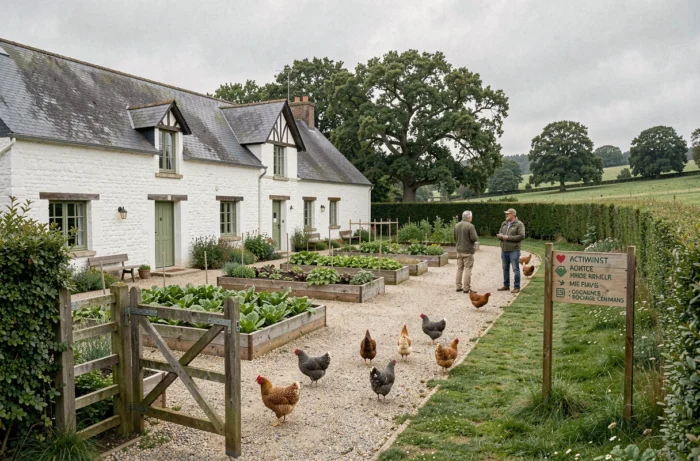
The Bienvenue à la ferme network lists pedagogical farms throughout the Pays de la Loire. This network allows communities to find nearby partners, without imposing long journeys on families with young children.
Sarthe, the department of Bocage Cenomans, is located in the northeastern part of the region. Pedagogical farms coexist with operations focused on picking or direct sales of farm products. Not all offer suitable accommodations for community groups: some target only school groups, while others cater to individual families.
For an intercommunal entity organizing outings as part of its childhood services, choosing the farm involves checking the capacity to host groups, the availability of sanitary facilities, and the accessibility of the site for strollers. These logistical constraints weigh as heavily as the educational quality of the content offered.
The positive feedback recorded in Pruillé-le-Chétif confirms that the combination of a solid institutional framework and a well-chosen partner farm produces measurable results in terms of participation and family satisfaction. The choice of agricultural partner, the supervision ratio, and communication with parents determine the final outcome.