Choosing accommodation for a round-the-world trip is about more than picking from a list of lodging types. Each stop comes with different constraints: urban density, length of stay, climate, and accumulated fatigue. Travelers who use the same booking strategy in Southeast Asia and Western Europe waste money, comfort, or sometimes both.
Short-term rental regulations: what’s changing the game in Europe
Competitors rarely discuss regulations, and that’s a mistake. In Europe, a short-term rental registration system now requires hosts to obtain a registration number in areas where local authorities require one. Platforms share booking data with local authorities.
The rule is not uniform across the continent. It harmonizes procedures wherever a country, region, or city introduces a system, but does not set a general limit on the number of nights a property can be rented. In practice, an apartment available in Lisbon may be subject to restrictions that do not apply to the same type of accommodation in Bucharest.
For long-term travelers, the takeaway is clear: check local rules before booking a private rental. A host without a registration number in a city that requires one could leave you facing a last-minute cancellation. The detailed listings for accommodation on the Tour du Monde website help you anticipate these requirements by destination.
Bookings made directly with hosts, outside platforms, are not covered by this data reporting. A neighborhood may therefore have more accommodation available than a single platform shows.

Accommodation budgets by region: balancing comfort and length of stay
Accommodation accounts for around a third of the overall budget for a round-the-world trip. But that proportion can vary dramatically depending on the regions you visit.
In Southeast Asia, a double room in a guesthouse or backpacker hotel often costs less than five euros a night. This makes it possible to choose the comfort of a private room without significantly affecting your monthly budget. In Western Europe or Oceania, by contrast, the same daily budget means opting for hostel dorms or house sitting.
Match your accommodation to the length of your stop
A stay of more than five nights in the same city makes a furnished rental worthwhile. Weekly rates on peer-to-peer rental platforms are significantly lower than nightly rates. In Latin America and Asia, negotiating directly with a local owner is still common and can bring prices down even further.
For short stops of one or two nights in transit, a local hotel or hostel is still the practical choice. The time spent searching for and negotiating alternative accommodation can outweigh the potential savings.
- Long stays (more than five nights): furnished rental, house sitting, or volunteering with accommodation included (such as WWOOFing) to reduce the daily fixed cost
- Medium-length stays (three to five nights): guesthouse or hotel room negotiated on arrival, asking for a discounted rate from the outset
- Transit stops (one or two nights): hostel or hotel near a transport hub, booked online the day before to secure availability
Negotiating in person and booking online: two incompatible approaches
Booking online guarantees availability and makes it easy to compare prices. We find this approach works well during peak season or in highly touristed destinations where properties fill up quickly.
By contrast, negotiating in person is often better in countries with a low cost of living. Prices listed on platforms include a commission that is passed on to the customer. A hotelier in India, Cambodia, or Bolivia will almost always offer a lower rate than the platform if you show up in person.
Inspect before you pay
Star ratings do not mean the same thing everywhere. A three-star hotel in Morocco and a three-star hotel in Thailand do not share the same standards or level of service. Inspecting the room before agreeing to stay is standard practice outside Europe. Check the bedding, plumbing, that the door lock works, and the condition of the mosquito net if one is needed in the area.
Online reviews can help, but they have their limits. A new property may have few reviews without being a bad choice. A highly rated property may have changed managers since the latest comments were posted. An in-person inspection is still the most reliable way to assess it.

Travel fatigue and comfort cycles: an underestimated factor
After several weeks of continuous travel, sleep quality and personal space become matters of health, not just comfort. Alternating budget accommodation with nights in a private room helps you stay energized on a trip lasting several months.
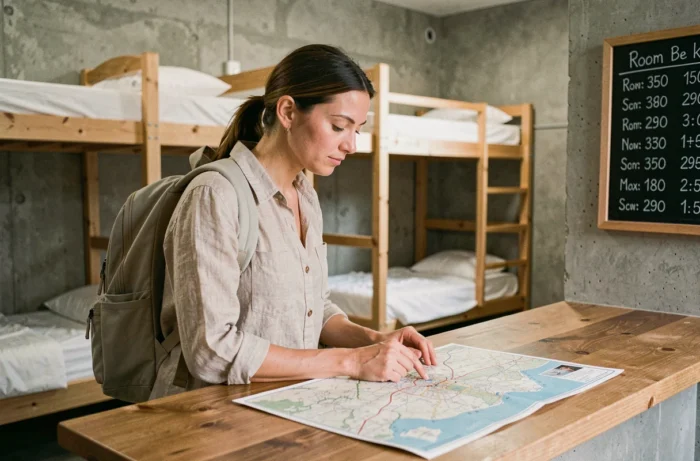
An eight-bed hostel dorm is fine for two or three nights in a row. Beyond that, the lack of privacy and nighttime noise can lead to sleep debt, affecting your ability to enjoy the days.
- Plan a night in a private room every four to five days in a dorm, even in inexpensive countries
- Choose house sitting or WWOOFing for longer breaks: free accommodation, a home-like routine, and personal space
- Identify in advance the stopover cities where hotels offer good value, and schedule your recovery breaks there
This rhythm is not a luxury. A round-the-world trip lasts several months on average, and travelers who wear themselves out over accommodation often end up cutting their itinerary short or facing medical expenses related to stress and fatigue. Choosing the right accommodation at every stop helps make the entire trip sustainable.