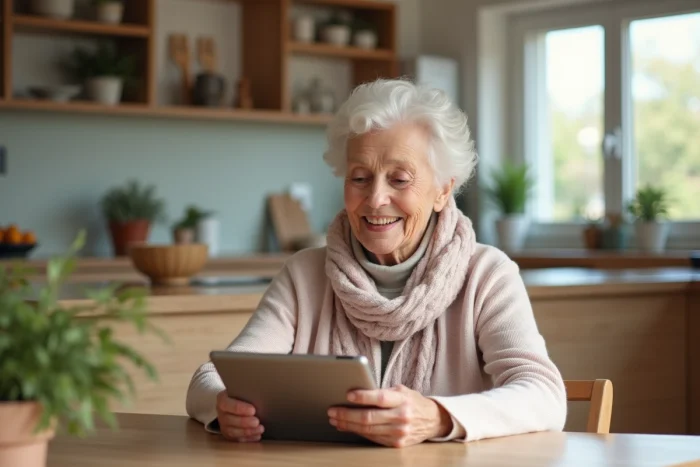
In France, nearly 90% of elderly people express the desire to stay in their homes for as long as possible, despite the loss of autonomy. Yet, the majority are still unaware of the technological devices and personalized services that can turn this wish into reality.
Coordination platforms, connected medical devices, and remote administrative assistance are slowly but surely changing the daily lives of seniors. The landscape is evolving rapidly, driven by innovation and a growing demand for concrete solutions.
Why is the home care of seniors becoming an essential issue today?
Aging at home, without giving up on habits or freedom, is no longer just a pious wish. French society, faced with an aging population, must tackle the issue of home care. For many seniors, staying in their homes is synonymous with dignity, stability, and a sense of belonging. However, this choice raises a series of challenges for families and caregivers: they must juggle safety, well-being, and social life while adapting to changes in autonomy.
The balance of daily life is often disrupted by the gradual loss of autonomy. Relatives, sometimes at a loss, seek ways to reconcile effective assistance with respect for the individual. This is where technological and social innovations come into play, offering alternatives to break isolation, facilitate support, encourage shared living, or strengthen local ties.
In this context, services for seniors with O Senior serve as a concrete support point. Here, one can find advice, tailored solutions, and support that adapts to each situation. Preserving quality of life, encouraging autonomy, and reinforcing the role of seniors in society: this collective mission makes perfect sense at a time when no one should be left behind.
Overview of innovations that facilitate home life
Aging is no longer synonymous with regression. Thanks to innovative solutions for seniors, daily life at home is transforming: it gains in comfort and safety. Connected devices are multiplying and are no longer limited to health: here are the tools that make a difference day by day:
- heart rate monitoring watches,
- connected blood pressure monitors,
- smart pill dispensers,
- each tool watches over health and safety, anticipates alerts, and prevents emergencies.
We can now rely on compact and reliable respiratory or nutritional sensors. These devices reassure relatives while allowing the elderly person to maintain their habits without sacrificing safety.
Telemedicine, for its part, has reached a new level: teleconsultations and telemonitoring are making their way into living rooms. Thanks to these, there is no longer a need for long trips to see a doctor or monitor one’s health. User-friendly medical tracking applications remind users to take their medications, offer regular assessments, and facilitate coordination with healthcare professionals.
Home automation, on the other hand, integrates discreetly: it controls lighting, shutters, heating, or security with a gesture or voice command. The following innovations prove particularly useful:
- voice assistants
- and automated systems limit the risk of falls, reduce fatigue, and simplify every movement.
AgeTech goes further, with robotics serving daily life: some robots break loneliness, while others assist with household chores. Here are two examples that illustrate these advancements:
- companion robots to break isolation,
- household robots to lighten the domestic load.
Thanks to this range of solutions, aging at home takes on a new face: that of autonomy, preserved social connections, and simplified daily life.
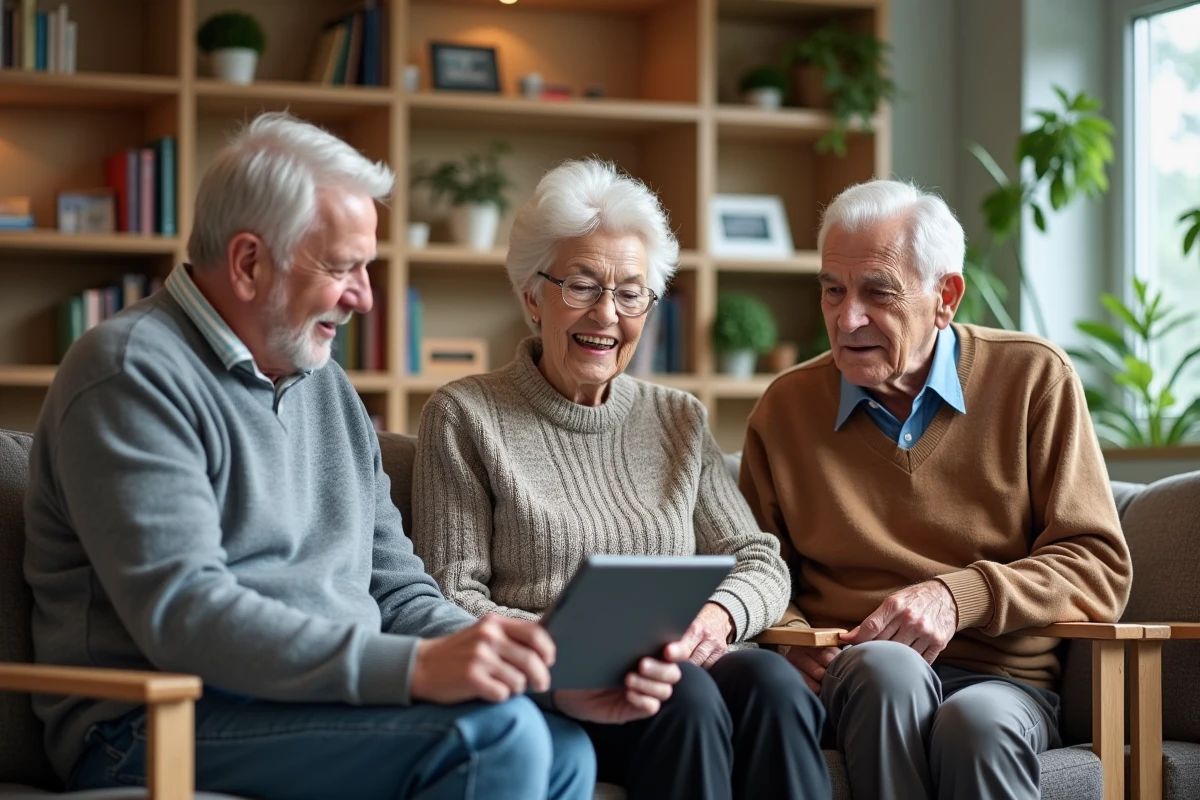
How to find the right solution and surround yourself with trusted professionals?
Finding the right solution involves a precise assessment of needs: level of autonomy, home environment, presence of caregivers, expectations regarding care or social support. The goal is to find the right balance between effectiveness, ease of use, and respect for each person’s pace.
Using home care aides or specialized services changes the game, both for the individual concerned and for their relatives. These professionals actively contribute to maintaining social connections, limit withdrawal, secure daily actions, and reduce anxiety. Remote assistance, connected monitoring, or intelligent management of home access provide a valuable sense of serenity for both seniors and their families.
Before committing, it is advisable to prioritize qualified providers, transparency about the services offered, and the ability to build truly personalized support. Several financial aids are available, making access to these solutions more affordable:
- personalized autonomy allowance (APA)
- tax credit for expenses related to support
- specific housing assistance
Taking advantage of these schemes reduces costs and provides access to innovations that concretely facilitate home care.
Communication remains the guiding thread: discussing with professionals, comparing different approaches, and sensing if trust is established. It is through time, based on a thorough assessment and open dialogue, that tailored support is built, aligned with each person’s personality and journey. Remaining an actor in one’s choices, even at an advanced age, is to refuse to fade away and to show that the future, at any age, deserves to be shaped to fit individual needs.