In Madagascar, civil marriage is not always seen as the cornerstone of romantic commitment. Here, the fihavanana, this solidarity woven between families, neighbors, and clans, profoundly shapes couple life. Expectations regarding female fidelity vary by region, differ from one caste to another, and are nuanced between urban and rural areas.
Customs inherited from the past still permeate society: alliances orchestrated by families, discretion elevated to a principle in the intimate sphere. However, globalization and population movements are shaking up yesterday’s benchmarks. The rules surrounding sexuality and fidelity are being redrawn in a subtle blend of local influences and contributions from elsewhere.
Sexuality and Fidelity in Madagascar: Between Cultural Heritage and Persistent Taboos
The fidelity of Malagasy women is rooted in a society where tradition weighs heavily and where education places family at the top of priorities. From childhood, discretion and loyalty are instilled as cardinal virtues, meant to protect the unity of the household. The Malagasy female figure often embodies the fihavanana, this acute sense of the collective that shapes daily life and imposes responsibilities towards the couple, kinship, and neighborhood.
Intimacy remains a matter of modesty. Practices such as wearing the lamba, as well as mastering the kabary and hainteny, remind us how female sexuality is surrounded by reserve, sometimes by unspoken rules. Social scrutiny weighs heavily, and taboos persist. Yet, in large cities, a new generation dares to express itself more freely, reinterpreting norms while keeping one foot in family tradition.
The Malagasy woman still plays a key role in transmitting values and preserving the household. She looks after the couple’s reputation, protects family balance, and often acts as an invisible mediator. The development of sex tourism exposes some young women to new dangers and stigmatization that disrupts balances, but it cannot summarize Malagasy society, which remains diverse and complex. To delve deeper into the subject, see: the fidelity of Malagasy women.
What is the Role of the Malagasy Woman in the Couple Today?
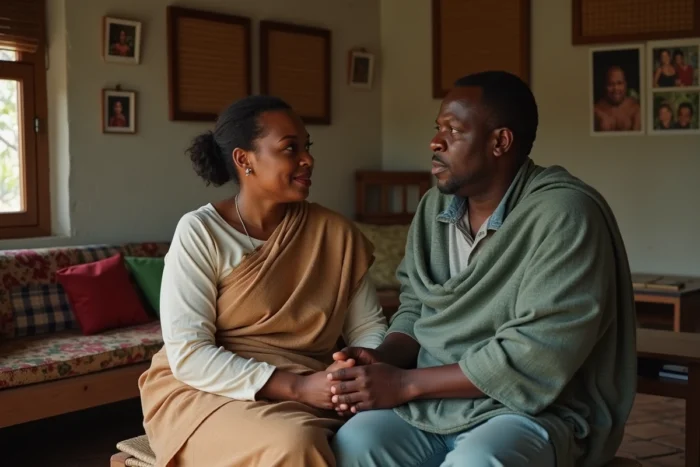
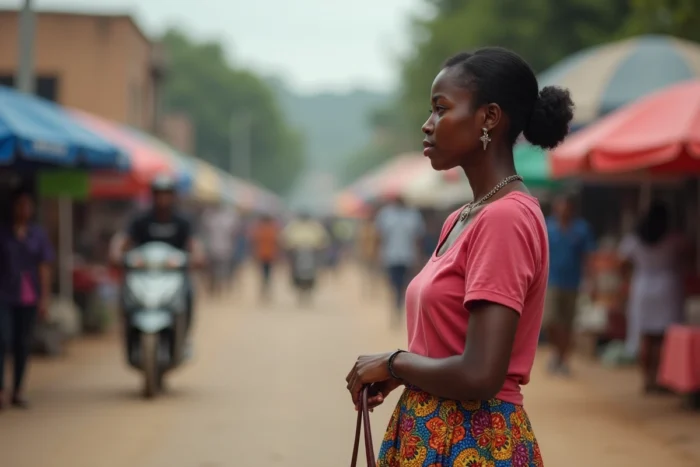
In the couple, the Malagasy woman juggles between tradition and change. Long considered the keeper of family memory, she finds herself at the center of the household, driving organization and ensuring stability. Her presence reassures, her commitment structures domestic life, and her versatility naturally asserts itself. She can be a mother, partner, educator, and sometimes even the head of the family.
But the lines are shifting. Economic emancipation is gaining momentum. More and more women are investing in paid employment, trying their hand at entrepreneurship, and participating in the informal economy. This autonomy disrupts traditional balances but does not erase the connection to inherited values. The quest for equality between women and men is asserting itself in the public space, driven by associations, NGOs, and institutions that defend women’s rights and fight against gender-based violence.
In the relationship, the Malagasy woman now refuses to fade into the background. Her opinion matters, her desires are expressed. The child remains a pillar of the household, reinforcing her central role. Increasingly present in political life, in debates, and in conflict management, women today are shaping a plural and assertive identity, balancing fidelity to their roots with a desire to move forward.
Tips for Understanding and Building a Fulfilling Relationship with a Malagasy Woman
Building a sincere romantic relationship with a Malagasy woman requires entering her universe and grasping the strength of family ties. Daily life is woven around family, which guides choices and shapes fidelity within the couple. Mutual respect, a central pillar, goes far beyond mere courtesy: it entails attentive listening, genuine consideration, and an equitable sharing of responsibilities. A committed word is never trivial; the fihavanana, this spirit of mutual aid and balance, often inspires the approach to tensions and disagreements.
To forge a solid and harmonious relationship, several attitudes make a difference:
- Authenticity: sincerity matters. Malagasy women appreciate frankness, genuine words, and dialogue without pretense.
- Patience: trust is not given outright. It is earned step by step, sometimes at the pace of families, guardians of the kabary, this art of speech that accompanies important moments.
- Openness: respectful curiosity brings people closer. Taking an interest in the lamba, the poetry of hainteny, and marriage customs shows a sincere desire to understand the other.
In the relationship, loyalty is a cardinal value. Many Malagasy women seek a serious story based on kindness and commitment. Some choose to go through marriage agencies to meet a partner who shares this vision. The extended family often remains very present, playing a role as mediator or arbitrator when tensions arise. Integrating traditional expectations while recognizing the growing openness to dialogue and cultural diversity: this is where a lasting relationship, rooted in the Malagasy reality of today, is drawn.
In this evolving society, where the old dialogues with the new, female fidelity is never reduced to a simple rule: it is lived, questioned, and embodied through the reinventions of the couple and shared dreams.