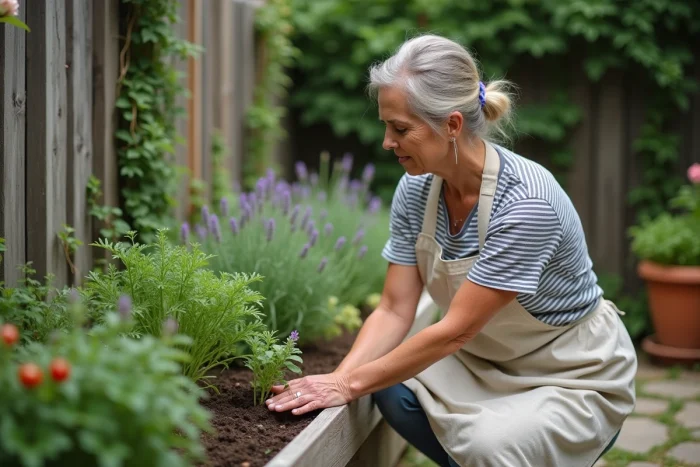
A harmonious garden rests on a principle often overlooked: the coherence between the soil, the local climate, and the chosen plants. Before thinking about colors or furniture, it is this technical adequacy that determines whether a flowerbed will last three months or ten years. Creating a flourishing garden at home requires understanding some concrete mechanisms, from the behavior of roots in clay soil to the spread of blooms throughout the year.
Plant palette adapted to drought: rethinking the harmonious garden
The more frequent heatwaves in France since the 2010s, documented by Météo-France, have rendered some classic compositions based on water-hungry plants obsolete. Cities like Montpellier and Lyon have generalized “dry” plant palettes in their public spaces since 2022-2023 to limit water consumption. The same reasoning applies to private gardens.
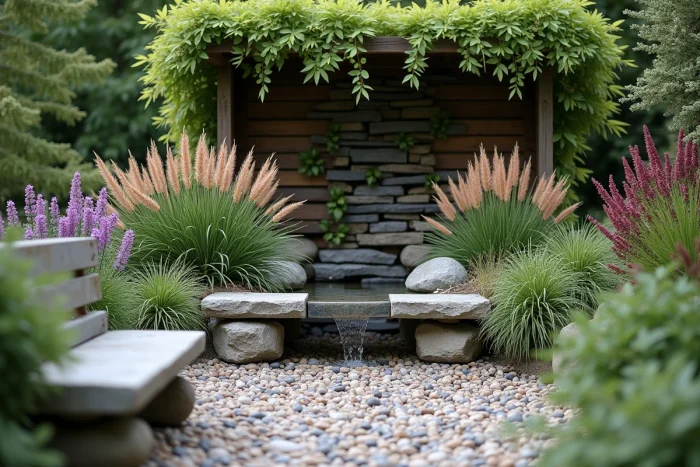
Lavenders, sages, grasses, and cistus form the foundation of a resilient flowerbed. These Mediterranean or xerophytic species can withstand weeks without watering once well-rooted. Combined with a thick mineral or organic mulch, they drastically reduce the need for summer maintenance.
Choosing drought-tolerant perennials does not mean giving up on colors. Sages offer shades ranging from deep blue to bright red, grasses add movement, and cistus bloom generously in spring. A garden designed on this basis remains visually flourishing without relying on daily watering. To explore landscaping possibilities further, it is useful to learn more about Perspectives Jardin, which details approaches suited to different contexts.
Soil and exposure: the technical diagnosis before any planting
Planting without knowing the nature of your soil is like cooking without tasting. Clay soil retains water and suffocates lavender roots. Sandy soil drains too quickly for thirsty roses. The soil sausage test remains the simplest method: take a handful of moist soil and roll it between your palms. If it forms a flexible sausage without breaking, the soil is clayey. If it crumbles, it is sandy.
Exposure plays a role as crucial as the nature of the soil. A south-facing facade in a continental zone creates conditions similar to a Mediterranean climate in summer, while a northeast corner remains cool even in July. Mapping these micro-zones in your garden allows you to place each plant where it will thrive without forcing it.
Correcting soil without replacing it
Amending clay soil with mature compost and coarse sand improves drainage over several seasons. For overly draining soil, adding organic matter (composted manure, chipped branches) increases water retention. These corrections should be made in the fall when the soil is still warm and workable.
A good diagnosis avoids costly replacements of poorly suited plants. It is better to spend half a day observing and testing your land than to replant the same flowerbed three times.
Blooms spread over four seasons: designing a garden that never sleeps
Most gardens peak in May-June and then fade. A truly harmonious garden maintains visual interest from January to December. The principle is simple: each season should feature at least two plants in bloom or with decorative foliage.
- In winter, hellebores, winter heathers, and colored-stemmed dogwoods provide structure and color when the rest of the garden is resting
- In spring, bulbs (daffodils, tulips, muscari) take over before the perennials settle in, followed by roses that ensure the transition to summer
- In autumn, grasses reach their peak, asters bloom, and the foliage of sweetgum or Japanese maple turns red and orange
Spreading blooms requires thinking in succession rather than simultaneously. On paper, note the blooming period of each chosen species and ensure that no season remains empty. This method avoids the classic mistake of a spectacular flowerbed in June and a dull one for the rest of the year.
Biodiversity in the garden: transforming a green space into an ecological framework
A garden is not a fixed decor. Monitoring programs like “Sauvages de ma rue” and the LPO Garden Bird Observatory show that, during the period 2020-2024, a garden with varied hedges and staggered blooms hosts significantly more species of birds, butterflies, and solitary bees.
The concept of private green framework starts from an observation: domestic gardens, when put together, represent a considerable area. Each mixed hedge, each unmowed flowering meadow, each pile of wood left in a corner creates a corridor for local wildlife.
Concrete actions to promote biodiversity
- Replace a monospecific hedge of thuja with a mix of berry-bearing shrubs (elderberry, viburnum, hawthorn) that feed birds in autumn and winter
- Leave a strip of unmowed lawn at the back of the garden so that pollinating insects can find refuge and food
- Install a water point, even modest (a dish placed on a stone), which quickly attracts beneficial garden helpers
An ecologically active garden is also more resilient to pests. Ladybugs, hoverflies, and chickadees naturally regulate aphids, reducing the need for treatments.
Designing a harmonious and flourishing garden involves technical choices rather than impulsive purchases at the garden center. A well-understood soil, plants suited to the actual climate, blooms planned in seasonal relay, and space left for local wildlife create an environment where the garden almost maintains itself. The hardest part is not planting; it is resisting the urge to plant everything at once.