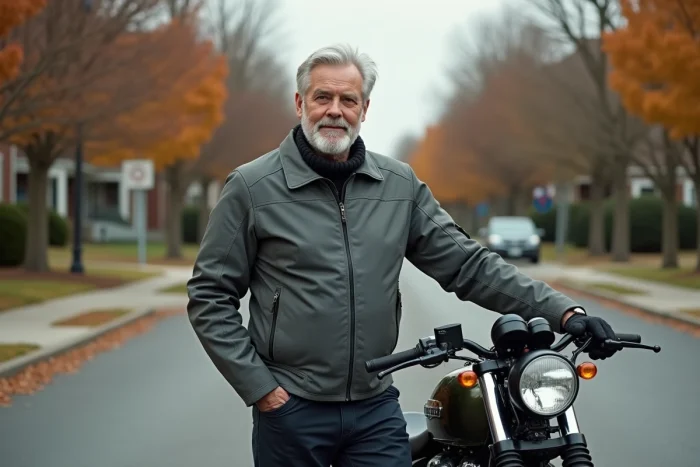
The choice of a motorcycle after 65 or 70 years old depends on specific physical parameters: joint mobility, grip strength, visual acuity, and reaction time. These factors, which evolve with age, determine the type of machine compatible with safe and regular riding.
Physical abilities and motorcycles after 70: what the body imposes on the choice
Most motorcycle guides for seniors list models without addressing the prerequisite: the physical condition of the rider. Neck mobility affects the control of blind spots. Arthritis in the hands limits the duration of riding on a traditional mechanical clutch. A decrease in peripheral vision alters the perception of lateral traffic.
Several European countries recommend a regular reevaluation of vision and cervical mobility beyond 70 years, without imposing a formal age limit. This self-assessment directly influences the choice: a rider with reduced cervical rotation will benefit more from a scooter with a wide windshield and high mirrors than from a trail bike whose position requires frequent torso rotations.
Finding a suitable motorcycle for seniors therefore starts with an honest assessment of one’s abilities, ideally validated by a doctor familiar with driving issues.
Seat height, weight, and center of gravity: the three decisive technical parameters
Before comparing models, three mechanical data points filter the machines compatible with a senior rider.
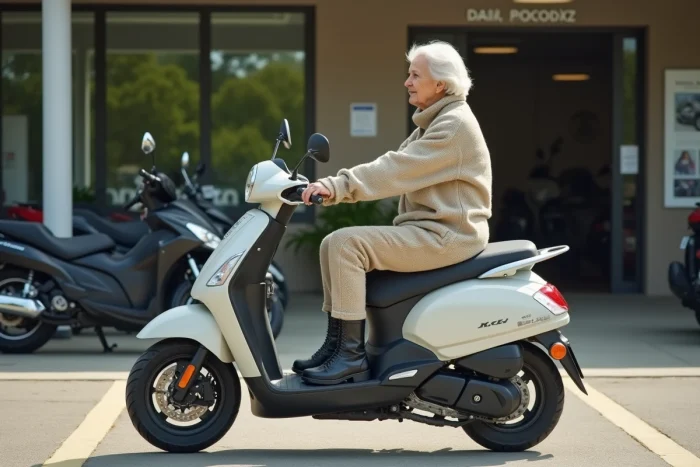
Seat height determines the ability to place both feet flat on the ground when stopped. A seat that is too high creates instability at traffic lights or in parking situations, where most low-speed falls occur. For an average-height rider, a seat below 780 mm offers a good compromise.
Weight fully fueled remains the most underestimated factor. A heavy motorcycle is not a problem on straight roads, but every maneuver at a standstill (U-turns, parking, kickstand) stresses the lower back, knees, and shoulders. Beyond a certain threshold, fatigue sets in well before the end of the ride.
A low center of gravity makes weight management easier. A custom or roadster concentrates its mass close to the ground, making it more forgiving than a tall trail bike whose high center of gravity amplifies imbalances at low speeds.
Adaptations from disability: transferable solutions for seniors
Motorcycle training centers for people with disabilities offer adaptations rarely mentioned in senior guides, even though they address similar limitations.
- The electric gear selector eliminates the repetitive effort of the left foot, useful in cases of ankle or knee arthritis
- Handlebar-mounted controls allow for braking and downshifting without straining the lower limbs, a relevant option after hip surgery
- Wide-track tricycles, derived from classic motorcycles, eliminate the balance issue at a standstill while retaining the motorcycle riding experience
These devices, developed for adapted motorcycle licenses, allow older riders to continue riding safely on a motorized vehicle that is much more forgiving regarding balance. The approach involves consulting a specialized center capable of assessing needs and adapting the machine.
Recommended motorcycle models for senior riders
Rather than a long list, three categories deserve attention based on the intended use.
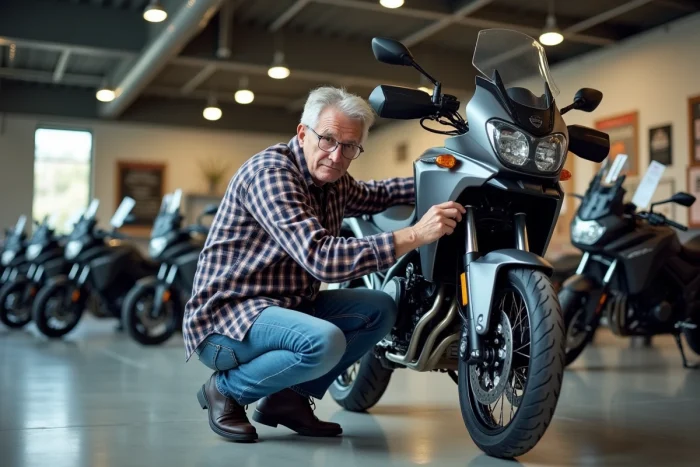
Light roadster for departmental roads
The Suzuki SV 650 combines a manageable weight, an accessible seat, and a smooth low-rev engine. Its V-twin does not require high revs to deliver torque, reducing fatigue on one to two-hour trips. The Honda Rebel 500 offers a similar profile with a custom position and an even lower seat.
Comfortable touring bike for long trips
For travel, a touring bike with aerodynamic protection, a wide seat, and adjustable suspensions transforms the ride. The windshield and heated grips reduce muscle fatigue related to cold and wind. The semi-upright position preserves the lower back over several hundred kilometers.
Large-wheeled scooter for urban use
An automatic transmission scooter eliminates the management of the clutch and gear selector. Models with large wheels offer superior stability compared to the small wheels of classic urban scooters. The absence of a manual clutch relieves arthritic hands and simplifies city riding.
Priority safety equipment for senior motorcyclists
Passive protection partially compensates for the decrease in reflexes. Certain equipment deserves a priority investment.
- A helmet with a wide visor and anti-fog treatment preserves the field of vision, already reduced with age
- An airbag vest (mechanical or electronic) protects the chest and spine, the most vulnerable areas in case of a fall after 65
- High boots with non-slip soles secure foot placement, especially on wet or gravelly surfaces
- An intercom with voice navigation prevents taking eyes off the road to consult a GPS, which limits distractions
The choice of equipment weighs as much as the choice of the motorcycle in the overall safety of the senior rider. A good helmet and an airbag vest do not correct an unsuitable machine, but they offer an additional margin of protection against the hazards of the road.
Motorcycle riding after 70 remains accessible as long as one selects a machine consistent with their actual capabilities, not with the image one has of oneself at 40. A regular physical assessment, a lightweight motorcycle with a low seat, and modern protective equipment form a more reliable set than any prestigious model poorly suited to the rider’s physique.