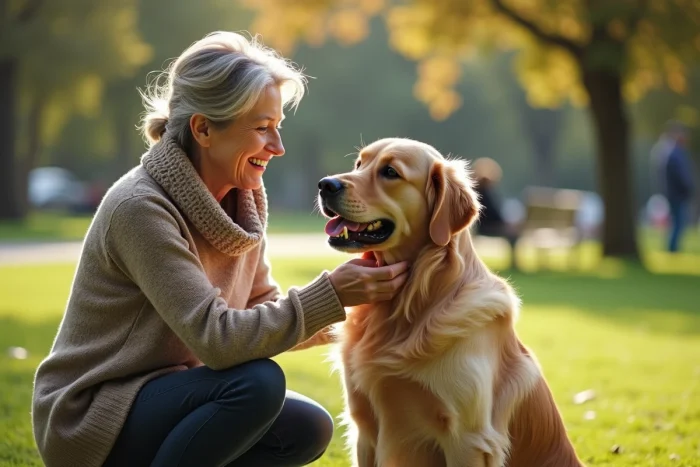
A dog does not perceive the concept of hierarchy in the same way as humans do. Some behaviors often labeled as dominance are actually the result of a misunderstanding in interspecies communication.
Adopting a lifestyle that respects the physical and mental needs of the dog radically transforms the relationship. Once we take the time to decode their signals, cohabitation becomes smoother, and many daily tensions fade away.
What the human-dog relationship reveals about your companion’s well-being
In every household, the presence of the dog is felt at every moment: walks, play, quiet times, being at the heart of the family. This proximity shapes the animal’s temperament, which constantly adapts to the dynamics of the household, to children, to other animals, or even to its peers. The dog’s ability to adjust, often underestimated, speaks volumes about its social intelligence.
The true quality of the relationship is measured through observation. Home veterinarians, such as Dr. Milou, emphasize the importance of paying close attention to every detail of canine behavior. Ears back or relaxed, a loose tail, an open posture: all of this provides insight into the animal’s well-being. A dog that isolates itself or withdraws expresses a subtle but very real discomfort. Being attentive to these signals is to offer your dog a space where it feels heard.
The diversity of human-dog bonds is also expressed in popular culture. Sandrine Revel, in her comic strip, captures the complexity of this attachment with rare accuracy. Depending on the country, such as France or Belgium, different educational or veterinary approaches can be observed, shaped by culture and law. Far from being an obstacle, this plurality represents a tremendous source of inspiration for enriching daily life with your companion.
To delve deeper, everything about dogs allows for a more detailed exploration of your animal’s needs, emotions, and life. Relying on reliable resources is to build a relationship based on mutual respect and trust.
What keys to understanding and educating your dog on a daily basis?
Deciphering canine behavior begins with a meticulous observation of body language: each dog expresses itself in its own way. Here are some clues to consider for better understanding its attitudes:
- The position of the tail, whether high or low, reveals its state of mind.
- The ears, whether upright or back, and the overall body posture complete this picture.
- Some calming signals, such as looking away, yawning, licking its nose, or moving slowly, are attempts to diffuse tensions.
Vocalizations also provide precise indications. A high-pitched bark alerts to the presence of a stranger, a growl signals distrust, a whine conveys discomfort, and a howl aims to establish contact from a distance. The environment, routine, and socialization form the foundation of the dog’s emotional balance. An animal that destroys, runs away, or shows jealousy often sends a signal of lack: lack of physical exercise, interactions, or mental stimulation.
To advance your dog’s education, several avenues emerge:
- Focus on positive reinforcement: reward desired behaviors, cooperation, and patience. This fosters trust and motivation.
- Adapt your method to the breed and history of your animal. Certain traits, such as the propensity to run away or howl, are more pronounced in some lines.
- If your dog is still a puppy, offer it gradual and varied socialization. This step prevents many future issues.
In the face of more complex situations, such as resource guarding or persistent soiling, the support of a dog trainer proves very useful. Rigorous observation, combined with consistency in rules, constitutes the common thread of sustainable behavioral balance.
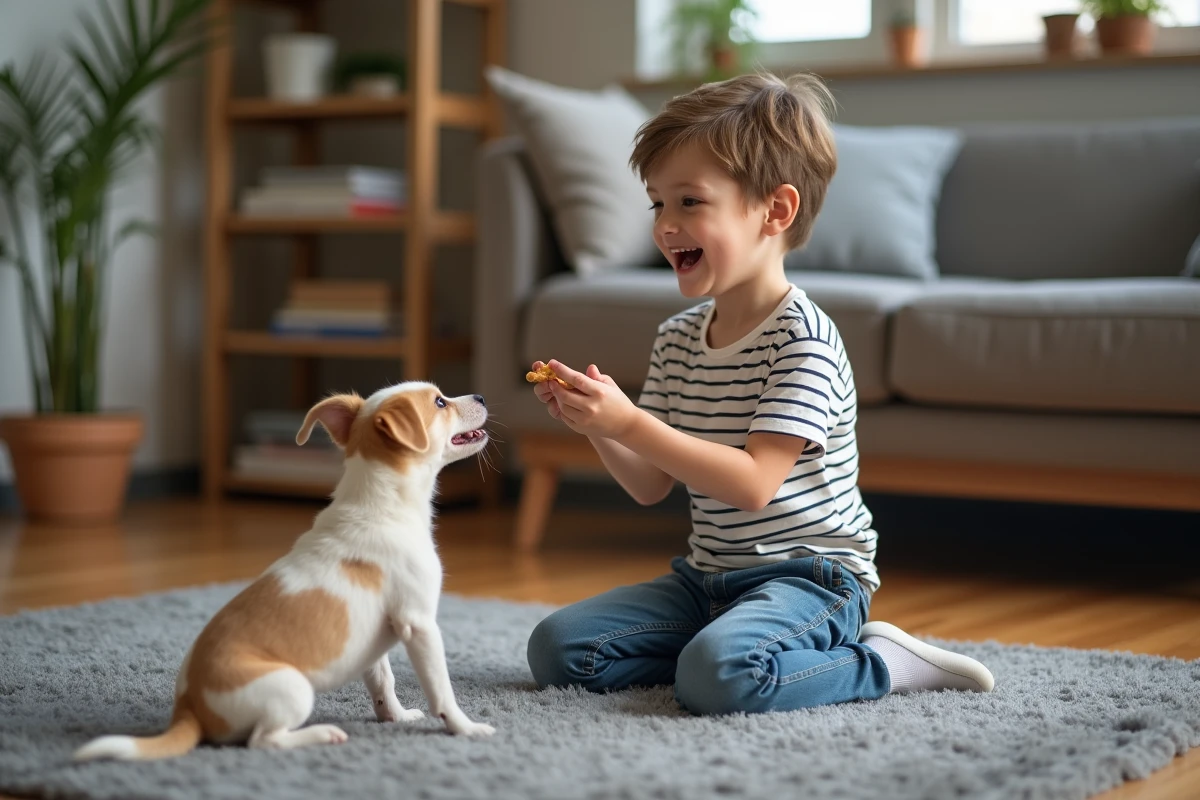
Practical tips to strengthen the bond and balance of your duo
Living with a dog means moving forward together, between daily rituals and mutual listening. The relationship is woven in the little things: a real walk suited to its energy level, a detour through new paths, regular encounters with other dogs, scent games to stimulate its sense of smell. Mental stimulation is just as important as exercise: interactive toys, fun educational exercises, searching for treats in the grass, every shared moment strengthens the bond.
To support this duo, several points of vigilance facilitate daily balance:
- Nutrition should take into account age, size, and lifestyle. A visit to the veterinarian can help avoid mistakes or food intolerances.
- To prevent separation anxiety, it is better to proceed in stages: gradual desensitization, stable cues, departures without fuss. In some cases, specialized support is beneficial.
- Running away often stems from boredom or fear. Secure the outdoor space, work on recall, and if necessary, equip your dog with a GPS collar to limit risks.
- Aggression requires the help of a behaviorist and individualized work on emotion management.
Caring for your dog also means focusing on prevention: regular veterinary visits, appropriate health insurance, accessories chosen according to its age. By cultivating a stable environment rich in exchanges and activities, you give your duo every chance to grow together over the years. The loyalty of a dog, once earned, is never forgotten: it accompanies, silent and strong, every shared step.