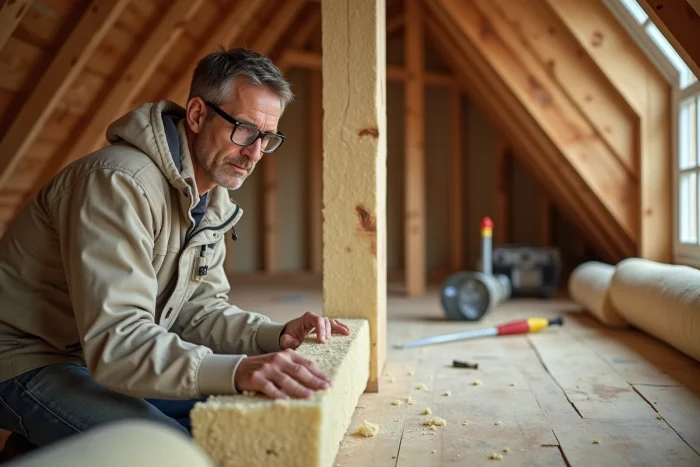
The energy renovation of a home is not just about adding a layer of insulation and changing the boiler. Since January 2026, the decree of December 12, 2025, requires an indoor air quality assessment after any MaPrimeRénov’ Parcours accompagné project. This obligation reflects a concerning observation: a significant portion of recent projects has degraded indoor comfort due to inadequate ventilation.
Successfully completing an energy renovation project requires treating the building as a system, not as a collection of isolated components. Insulation, heating, ventilation, and airtightness interact, and neglecting one can negate the benefits of the others.
Indoor air quality after work: the risk that estimates do not mention
The France Rénov’ study “Assessment of Support 2025” reports an increase in renovation failures linked to over-insulation without adequate ventilation. Nearly one in five audited households finds actual performance lower than expected. The pattern repeats: walls and roofs are insulated, windows are replaced with double or triple glazing, and the home becomes airtight. Without calibrated air renewal, humidity stagnates, indoor pollutants accumulate, and mold appears within months.
The requirement for a post-work air quality assessment, effective from January 2026, specifically addresses this issue. It applies to projects funded through MaPrimeRénov’ Parcours accompagné. In practice, a diagnostician checks after the work that the air renewal rates meet current standards.
For homeowners developing their renovation project with the help of a facilitator, this step changes the game: it requires integrating ventilation from the design phase, not as a last-minute adjustment. Organizations like 3e habitat help structure this comprehensive approach before the work begins.
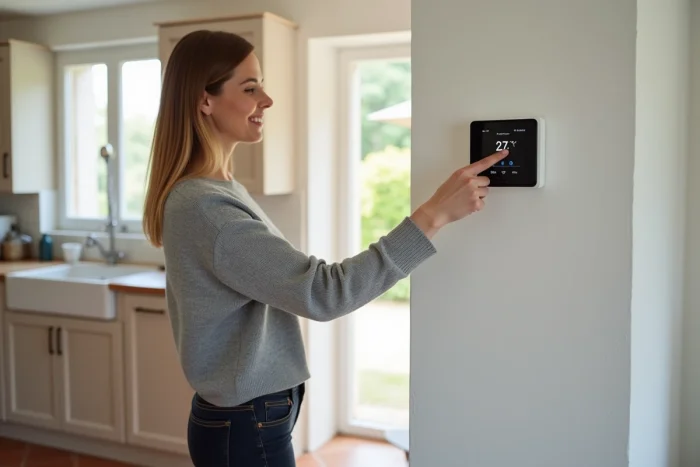
Energy renovation and bio-based materials: a sector still poorly funded
The ADEME report “Bio-based Materials in Renovation” published in March 2026 confirms a clear trend: the use of cellulose wadding, wood fiber, or hemp is increasing in renovation projects. These materials reduce the carbon footprint of the project itself, not just the energy consumption of the home once renovated.
The problem remains financing. Standard aids like MaPrimeRénov’ do not specifically cover the extra cost of bio-based insulators. A wood fiber insulator costs significantly more than a conventional mineral wool with equivalent thermal resistance. The homeowner absorbs the difference, which hinders adoption despite the environmental benefits.
Technical guides updated by ADEME provide implementation recommendations for these materials. Their use requires special attention to moisture management: a poorly installed vapor barrier on a bio-based insulator can cause structural damage that may only be detected years later.
Criteria for choosing an insulator for sustainable thermal renovation
- The target thermal resistance (expressed in m².K/W) should be defined by the energy audit, not by the supplier’s salesperson.
- Thermal lag, which measures the time it takes for heat to pass through the material, favors dense insulators like wood fiber in summer.
- The permeability to water vapor determines whether the wall can continue to “breathe” after insulation, a critical parameter for old stone or earth buildings.
Large-scale renovation in condominiums: greater gains than individual projects
The ANAH report “Collective Renovations 2025” highlights an acceleration of collective projects since mid-2025 thanks to the MaPrimeRénov’ Copropriété scheme. Collective renovations surpass individual initiatives in terms of overall energy gains.
The reason is technical. Insulating a single apartment in an unrenovated building creates thermal bridges at the junctions with neighboring units. The building envelope remains compromised. In contrast, external thermal insulation across the entire condominium addresses the building as a whole, eliminates thermal bridges between floors, and reduces heat loss uniformly.
Known barriers remain: decision-making in general assemblies, financing the remaining costs for each co-owner, and coordinating work on an occupied building. Field feedback varies on this point, with some property managers reporting shortened voting times due to the scheme, while others describe persistent blockages related to income disparities among co-owners.
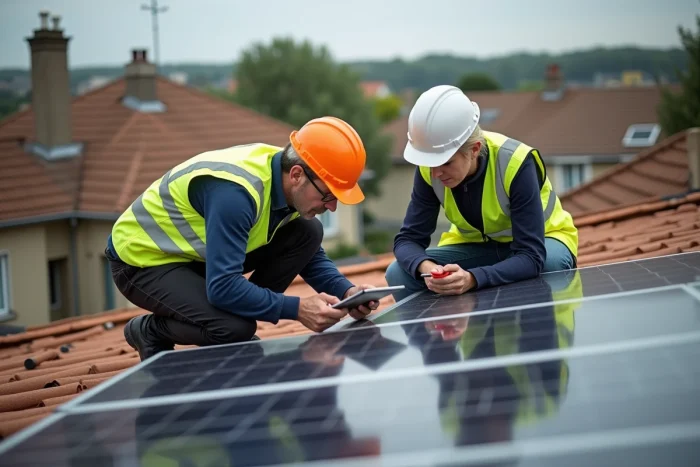
Adapting energy renovation to existing buildings: old houses vs. new construction
A 1970s concrete block house and a 19th-century stone house are not renovated in the same way. Applying a standard solution to an old building can cause irreversible structural damage.
For newer constructions (post-1950), external insulation with rigid panels works well. The supporting wall is regular, the foundations are sized to support moderate overload, and moisture management is relatively simple.
For old buildings made of stone or cob, the logic reverses. These walls naturally regulate humidity through capillarity. Enclosing them under an impermeable insulator blocks this mechanism and concentrates water in the masonry. Suitable solutions exist (lime-hemp renders, internal insulation with breathable panels), but they require a precise assessment of the substrate and careful implementation.
- Have a structural assessment done before any intervention on an old wall, in addition to the standard energy audit.
- Prefer artisans trained in the renovation of old buildings, identifiable through the Maisons Paysannes de France networks or the Espaces France Rénov’.
- Ensure that the project respects the water vapor permeability of the existing wall, especially if the home is located in a humid area.
The energy audit remains the starting point for any renovation project, but it is not sufficient for atypical buildings. A thermal audit without substrate assessment leads to inappropriate recommendations, such as externally insulating a stone wall that requires a breathable approach. The cost of a complementary assessment represents a fraction of the overall budget and avoids costly rework two or three years after the project is completed.